A Windy Afternoon by the Sea, Planned Around One Warm Pause
Plan a windy afternoon by the sea around a sheltered warm pause, a modest route and weather-watching, so the outing feels calm rather than crowded.
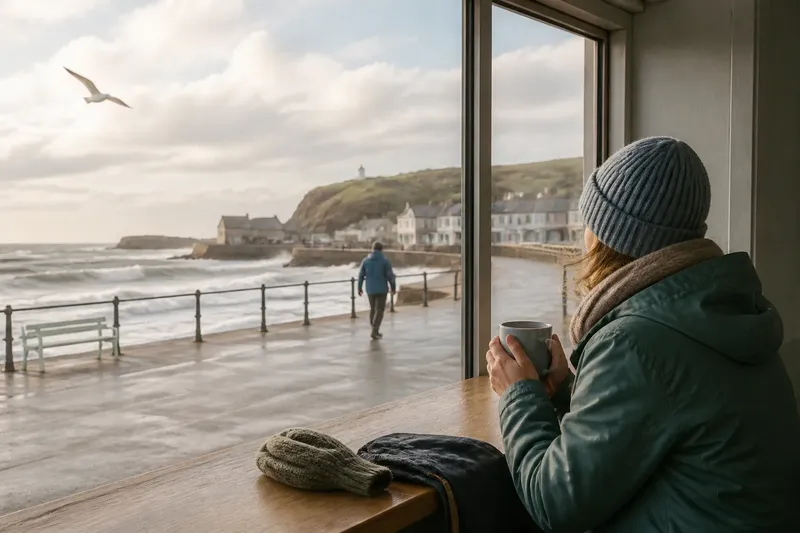
A paper cup rattles on the promenade as a gust sweeps grit across the path. A windy afternoon by the sea can still feel restorative if you plan around one sheltered warm pause, then let the route and the weather set the pace. The aim is not to outrun the wind or collect a string of stops; it is to have somewhere comfortable to turn towards when the open shore becomes tiring.
Choose the pause first
Start by finding a place to warm up, rather than plotting a long walk and hoping a café appears at the right moment. Look for a public café, a kiosk with indoor seating, a sheltered pavilion or a suitable indoor space near the shore. Check opening times and access before setting out, especially outside the main visitor season.
Choose somewhere that works as a natural midpoint or turning point. A warm pause should be close enough to reach without pushing through a long exposed stretch, but not so close that the outing becomes only a dash there and back. If indoor options are limited, choose a sheltered bench or a spot behind a substantial sea wall, while treating this as a brief rest rather than a substitute for proper warmth.
Decide what “warm” means for your party. For one person it may be a hot drink indoors; for someone else it may be a windproof layer, a dry seat and a chance to stop moving. If you are bringing children or anyone who tires easily, make the pause practical: somewhere to sit, use facilities if needed and leave without having to cross a large car park or busy road.
Keep the route modest
Pick a short outward route with an easy return, using a promenade, marked coastal path or other familiar public way. A loop can look appealing on a map, yet a headwind on the way back may turn it into a slog. An out-and-back route gives you more control: you can turn early, stay near the shelter or continue when conditions feel comfortable.
Before leaving, identify a clear turning point such as a harbour entrance, a named viewpoint or the warm-pause venue itself. Avoid building the plan around a narrow ledge, a cliff edge or a path that may be affected by tides. Local access notices, tide information and official weather advice matter where the route or conditions make them relevant; follow any posted restrictions and choose another walk if the shore is exposed or unsafe.
Wear a windproof outer layer and shoes suited to the surface. A hood or hat that stays put, gloves and a scarf can make a short pause outdoors more pleasant, while a small bag can hold a dry layer and a drink. Keep hands free where possible: wrestling with loose bags or an umbrella in strong gusts can make an otherwise simple walk awkward.
Watch the weather in small ways
On arrival, take a moment to notice what the wind is doing before committing to the route. Watch grass, flags, sea spray and the direction in which people lean into the gusts. Check whether the wind is coming from the water or from behind the promenade, and notice where walls, buildings or dunes create calmer pockets. These observations are useful for choosing where to walk and when to turn back, but they are not a replacement for a forecast or safety notices.
Give the weather a little attention as you go. A shifting cloud edge, a change in spray or a sudden drop in comfort can be a cue to move towards shelter. There is no need to stop at every view or to turn weather-watching into a project. A few quiet observations can make the outing feel connected to the coast without asking you to stand still in a biting wind.
Say you arrive at a seafront with a café beside the harbour and a promenade that continues towards an exposed headland. You could walk along the sheltered section, stop indoors for a warm drink, then decide at the café whether the breeze has eased enough for a short look towards the headland. If it has not, returning along the promenade still completes the plan; the point was to have room to choose, not to reach the farthest landmark.
Make the pause useful
When you reach your sheltered stop, take off a damp outer layer if you can and let cold hands warm gradually around a mug or in gloves. A pause is also a chance to check the return route and how everyone is feeling. If the group is quiet, chilled or keen to leave, shorten the next stretch rather than bargaining for one more stop.
Keep the pause simple. A café visit, a seat in a sheltered public space or a snack from home can all serve the same purpose. It is not worth carrying elaborate picnic equipment for a blustery outing, nor is it helpful to force a scenic stop if the spot is uncomfortable. Choose the option that gives you a genuine rest with the least fuss.
What should you plan?
How long should the walk be?
Choose a route that leaves enough energy for the return, not just the outward stretch. If the wind is stronger than expected, shorten it at the first convenient turning point.
What makes a good sheltered stop?
Look for somewhere you can sit or stand out of the wind, with a straightforward way to leave. An indoor venue is more dependable for warming up than a wall or a stand of trees.
Should you bring a flask?
A flask can make a simple pause easier when cafés are closed or far apart. Pack it only if carrying it will not make the walk cumbersome, and keep a dry layer available too.
What if the weather turns?
Head back by the shortest familiar public route or move to a suitable indoor place. If official advice or local notices indicate dangerous conditions, cancel the coastal walk rather than trying to adapt it on the shore.
Leave room to change plans
A good windy afternoon by the sea has a clear anchor and a flexible edge: one warm pause, one manageable route and permission to turn around. That structure lets you notice the moving water and changing light without treating every minute as an itinerary to complete.
Before leaving home, tell someone where you intend to walk if you are going alone, and keep your phone accessible rather than buried beneath spare layers. Then set off with the warm stop in mind, but let comfort and conditions decide how much coast you see. The useful measure is whether you return feeling ready for the rest of the day, not how many landmarks you managed to pass.